
For a long drive, use a neck or lumbar pillow only if it fills a real gap without pushing you away from a safe driving position. Install and adjust it while parked, then confirm normal visibility, steering reach, pedal reach, seat-belt fit and head-restraint operation. A comfort pillow does not treat pain or make fatigued driving safe.
1. Begin with the vehicle's adjustments
Before adding a pillow, set up the factory seat:
- Adjust the seat distance so you can operate the pedals normally.
- Set the seatback and steering wheel for comfortable control.
- Adjust the head restraint and mirrors.
- Fasten the seat belt and confirm its normal path.
- Test the vehicle's built-in lumbar adjustment, if fitted.
Do this while parked. The accessory should address a remaining comfort gap, not create a new driving-position problem.
2. Choose the area that actually needs cushioning
A neck pillow and a lumbar pillow occupy different parts of the seat.
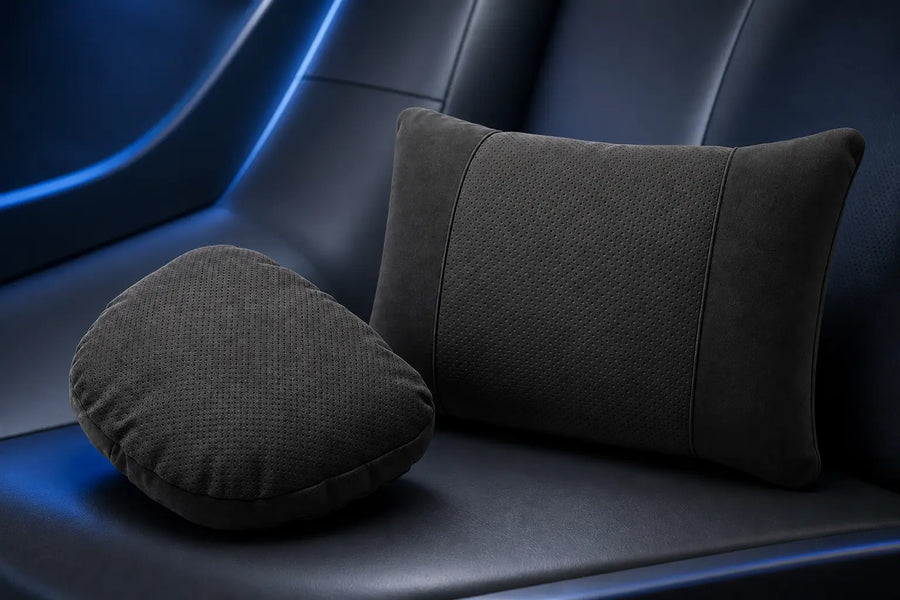
Neck Pillow: a compact option for positioning near a compatible headrest or upper seatback. The Car Gadgets version is approximately 28 × 22 × 10 cm.
Lumbar Pillow: a wider three-panel option for the lower seatback. It is approximately 40 × 30 × 12 cm.
2-Piece Set: one Neck Pillow and one Lumbar Pillow in the same selected color.
More cushioning is not automatically better. If only the lower seatback leaves an unwanted gap, begin by evaluating the lumbar position rather than adding both pieces by default.
For a detailed comparison, see Car Neck Pillow vs. Lumbar Pillow: Which One Fits Your Seat?.
3. Complete the five-point parked fit test
After attaching the selected pillow, sit in the vehicle with the engine off and the parking brake set where applicable.
Head and upper body
The neck pillow should not push your head noticeably forward, force your chin down or prevent normal head movement. It must not replace or disable the factory head restraint.
Visibility
Check the windshield, side windows and mirrors. Your normal eye position and useful field of view should remain acceptable.
Steering and pedals
Confirm that you can steer and operate each pedal normally without stretching, crowding or shifting away from the seat.
Seat belt
The shoulder and lap portions should follow their normal paths. The pillow or strap must not cover a belt guide, buckle or anchor.
Seat hardware and airbags
Inspect the full strap route. Keep it clear of airbag seams, seat controls, adjustment levers and head-restraint hardware. Follow the vehicle owner's manual.
If any check fails, reposition or remove the pillow before driving.
4. Take a short local test drive
Do not make a long trip the first test. After the parked checks pass, try the setup on a familiar local route.
Notice whether the pillow:
- stays at the selected height;
- shifts when you turn your shoulders;
- changes how you enter or exit the vehicle;
- creates a pressure point;
- changes steering, pedal or mirror use;
- causes the seat belt to move out of its normal position.
Stop safely before making any adjustment. Never reach behind the seat or loosen the strap while the vehicle is moving.
5. Recheck after another driver uses the car
A shared vehicle can change between trips. Seat distance, recline, head-restraint position and mirror angles may all be different.
Repeat the parked fit check whenever:
- another driver has adjusted the seat;
- the pillow has been removed or moved;
- luggage or a rear-seat setup changes access to the strap;
- the product no longer stays in its selected position.
A setup that works for one occupant is not automatically suitable for another.
6. Plan for fatigue separately
Cushioning and alertness are different issues. A pillow may change how the seat feels, but it cannot make up for insufficient sleep or driver fatigue.
The CDC notes that fatigue can slow reactions, impair decisions and cause microsleeps. Do not begin a journey when tired. Plan safe rest locations, and if you feel sleepy while driving, pull over in a safe place rather than relying on a comfort accessory, open window or loud music.
Driving rules and recommended break intervals vary by location. Follow local requirements and build sufficient rest time into the trip.
7. Use the rest stop as a reset point
At a planned stop, inspect the setup while the vehicle is parked:
- Is the pillow still centered?
- Is the strap secure and clear of safety equipment?
- Has the seat belt returned to its normal path?
- Does the pillow still feel appropriate, or should it be moved or removed?
If the setup encourages you to sit farther from the seatback or changes vehicle control, remove it for the next section of the trip.
Pre-trip checklist
- ☐ Factory seat, mirrors, head restraint and steering wheel adjusted first
- ☐ Correct pillow area selected
- ☐ Pillow footprint fits within the clear seatback area
- ☐ Strap does not cross an airbag seam, belt guide or control
- ☐ Head is not pushed forward
- ☐ Visibility and mirror use remain normal
- ☐ Steering and pedal reach remain comfortable
- ☐ Seat belt follows its normal path
- ☐ Short local test completed
- ☐ Safe rest stops planned
- ☐ Pillow will be adjusted only while parked
Frequently asked questions
Is a car neck pillow good for long drives?
It can add cushioning near a compatible upper seatback when it fits correctly. Remove it if it pushes the head forward, restricts movement or interferes with the factory head restraint. It is a comfort accessory, not medical or safety equipment.
Should I use both a neck and lumbar pillow?
Only if both positions pass the fit and control checks. A set is an available configuration, not a requirement for every seat or occupant.
Can a lumbar pillow change pedal reach?
Yes, any added depth can move the torso forward. Confirm normal steering and pedal use while parked, then complete a short local test. Remove the pillow if control is affected.
Can I adjust the pillow while driving?
No. Stop and park safely before changing its height, strap or position.
Does a car pillow prevent driving fatigue?
No. Fatigue is a driving-safety issue that requires adequate sleep, trip planning and safe rest. A comfort pillow is not a fatigue countermeasure.
Choose a setup, then prove the fit
Car Gadgets offers a single Neck Pillow, a single Lumbar Pillow or a matching neck and lumbar pillow set for compatible car seats. Compare the dimensions and strap route with your own seat before choosing.
For step-by-step fitting guidance, read How to Install a Car Neck or Lumbar Pillow Safely.
Sources and guidance
- Car Gadget Store product dimensions, fit and safety guidance
- CDC/NIOSH driver-fatigue guidance
- NHTSA vehicle air-bag and proper-seating guidance
- The Highway Code guidance on tiredness and journey breaks
This article provides general product and trip-planning information. Follow the vehicle owner's manual, local road rules and professional medical advice for health concerns.